


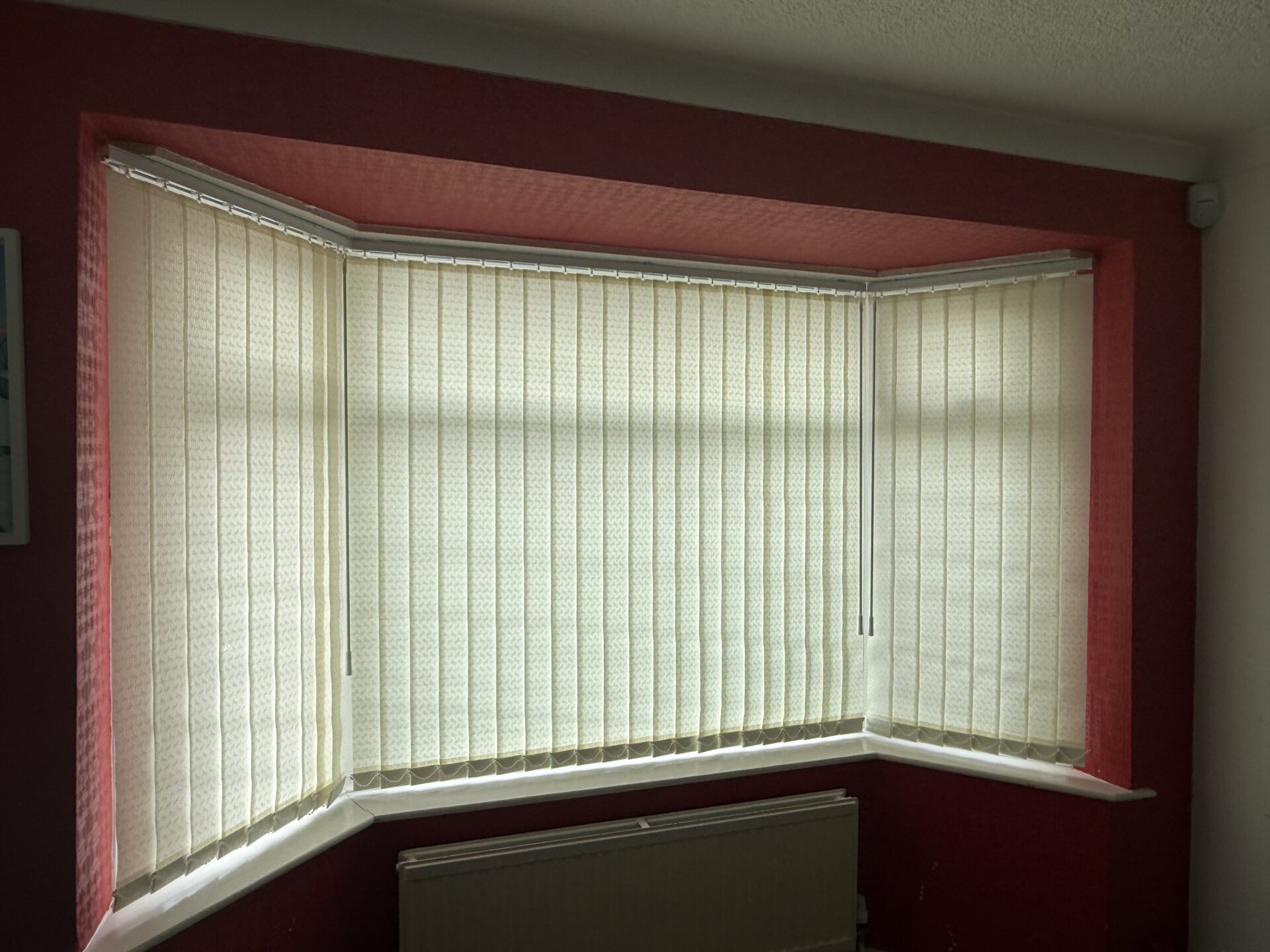
Vertical Blinds Guide: Styles, Rooms and Maintenance
This vertical blinds guide covers what genuinely matters when choosing vertical blinds for homes across the UK, particularly where windows and doors are wider than average. Their practical design makes them especially useful for large windows, patio doors, sliding doors and conservatories, where other types of blind may not suit as well.
One of the biggest advantages of vertical blinds is the level of control they give you over light and privacy. The individual fabric louvres can be tilted to adjust how much daylight enters a room, and the blind can be drawn fully to one side when you want a clear, unobstructed view.
If you are considering vertical blinds for your home, this vertical blinds guide explains how they work, where they are best suited, which fabrics to consider, and how to keep them looking their best.
Why Choose Vertical Blinds?
Individual vertical louvres, suspended from a headrail, make up a vertical blind. The louvres rotate to control light and privacy, and slide across the window when you want to open the blind fully, which makes them particularly practical for wide areas of glazing.
Vertical blinds give a cleaner, more streamlined appearance than traditional curtains. They are also available in a wide range of colours, textures and fabrics, making it easier to find something that genuinely complements your interior rather than sits awkwardly against it.
Excellent Light Control
Rotating the louvres gives you real control over daylight throughout the day. Angle the slats to let natural light in while cutting direct glare. Close them further when you need more privacy. If your priority when reading this vertical blinds guide is glare control, this is particularly useful in rooms with large windows that catch strong afternoon sun.
Ideal for Large Windows and Doors
Vertical blinds are particularly well suited to:
- Large windows
- Patio doors
- Sliding doors
- Bi-fold door areas
- Wide bay windows
- Conservatories
- Large areas of glazing
The vertical design also draws neatly to one side. This matters where a door is used regularly and needs to stay clear.
Which Rooms Are Best for Vertical Blinds?
There is no single room where vertical blinds have to go. Their versatility makes them a genuine option across several areas of the home.
Living Rooms
Large living room windows can let in a considerable amount of sunlight. Vertical blinds let you reduce glare without necessarily darkening the room completely, and they provide real privacy in the evening once the lights are on and people outside can see in.
Home Offices
If your desk sits close to a window, sunlight can create distracting reflections on a screen. Tilting the louvres lets you control the direction of incoming light, making a home workspace genuinely more comfortable to use.
Conservatories
Conservatories can become particularly bright and warm in sunny weather. Vertical blinds help control the amount of direct sunlight entering through large glazed areas, and add genuine privacy when the conservatory is used in the evening. For more on this specifically, see our guide to the best blinds for conservatories in Manchester homes.
Bedrooms
Vertical blinds can work well in bedrooms with larger windows or patio doors. Depending on the fabric chosen, they provide privacy and help reduce unwanted early morning light. For anyone who needs a genuinely dark bedroom, it is worth choosing a proper blackout fabric rather than assuming every vertical blind gives full blackout by default.
Choosing the Right Vertical Blind Fabric
The fabric you choose makes a real difference to how the blind performs and looks.
Light Filtering Fabrics
Light filtering fabrics soften incoming daylight while still letting natural light into the room, a good option for living rooms, dining rooms and other spaces where you want to keep a bright, airy feel.
Blackout Fabrics
Blackout vertical blinds are genuinely useful in bedrooms, children’s rooms and other spaces where reducing incoming light matters. It is worth knowing that some light can still enter around the edges of the blind depending on how it is fitted.
Easy-Clean Fabrics
For busy households, an easy-clean fabric is a genuinely practical choice, particularly where the blinds are exposed to everyday dust or where you want maintenance kept to a minimum.
How to Clean Vertical Blinds
One of the real advantages of vertical blinds is that they are straightforward to maintain. Dust regularly with a soft brush or a suitable vacuum attachment, and avoid excessive force, since the fabric louvres can crease or become damaged. If you have young children, the RoSPA guidance on blind cord safety is worth reading alongside this vertical blinds guide, regardless of which fabric you choose.
For washable or wipe-clean materials, follow the manufacturer’s cleaning instructions carefully. Do not assume every vertical blind fabric can go in a washing machine, since some genuinely cannot.
Are Vertical Blinds Still in Style?
Yes, genuinely more so than the basic designs commonly seen in homes decades ago. Today’s fabrics include textured finishes, subtle neutral colours and contemporary patterns, letting vertical blinds work with both traditional and modern interiors.
The key is choosing a fabric and colour that complements the room, rather than treating vertical blinds as purely functional. If you are still weighing up vertical blinds against other styles, our wider types of blinds guide and how to choose blinds article both cover the decision in more depth.
Are Vertical Blinds Right for Your Home?
Vertical blinds remain a genuinely practical solution for large windows and doors, combining flexible light control, privacy and straightforward operation. They are particularly worth considering if you have wide areas of glass, patio doors or a conservatory.
The right fabric, colour and fitting method can make a real difference to the finished result. Professional advice is worth having if you are unsure which option suits your windows.
Get a Free Quote for Vertical Blinds
We measure every window ourselves, bring genuine fabric samples to your home, and give honest advice on which fabric and fitting suits your room.
Call 01617062233 for a free, no obligation quote, or browse our full range of made to measure options.